.svg)
What are Device Posture Checks?
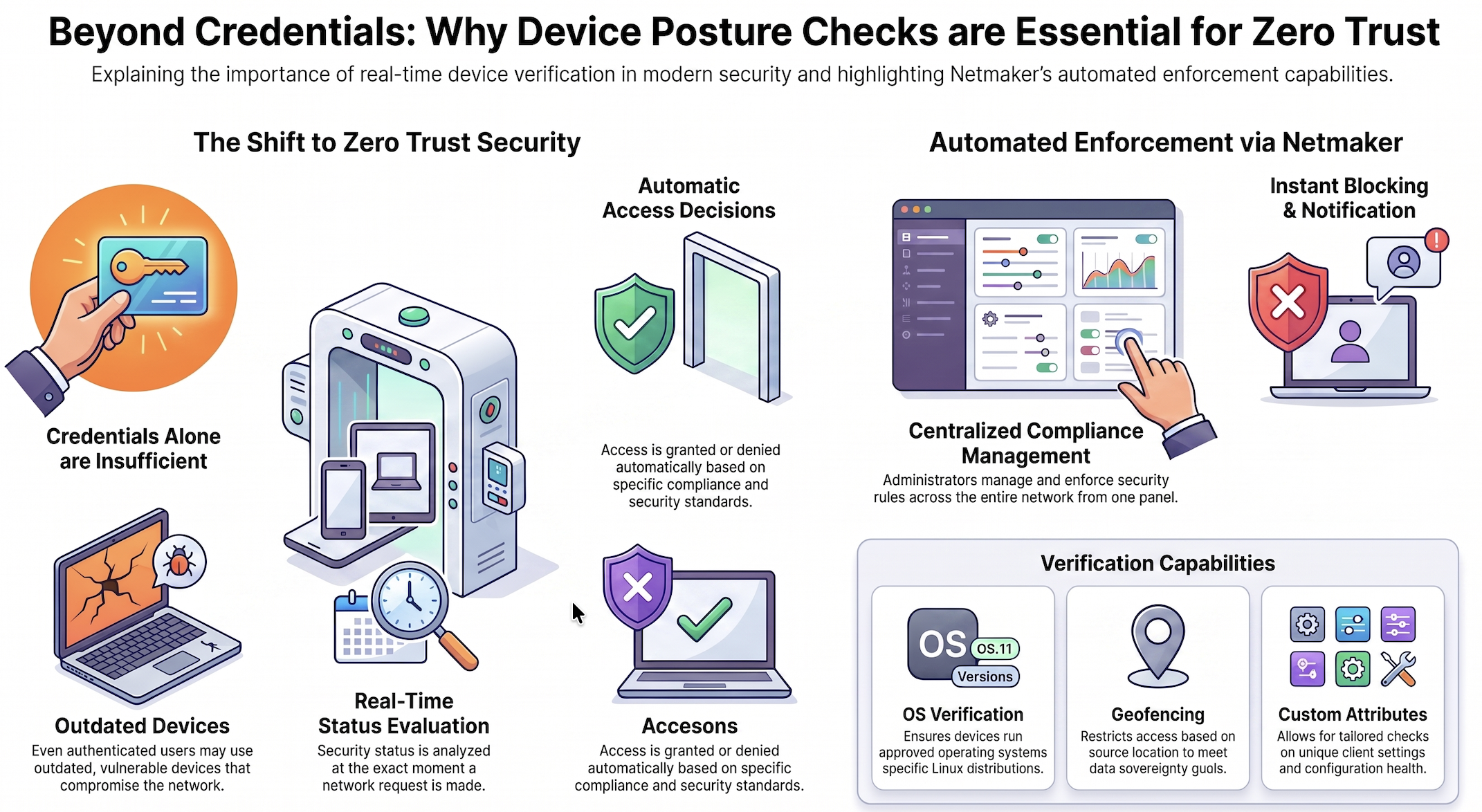

Traditionally, organizations work to secure the network perimeter. However, perimeter-based models are increasingly insufficient against modern threats, as they can come from the inside. Zero Trust has emerged as the modern framework for security, with a tagline of "never trust, always verify." Device posture checks have emerged as a key part of this modern security model.
What are Device Posture Checks?
Device Posture Checks are security evaluations that analyze the actual condition and security status of a device at the moment a network access request is made. Unlike traditional systems that may only verify user credentials, posture checks ensure that the endpoint itself meets an organization's specific compliance and security standards before it is allowed to enter the network. Depending on the results of these checks, access can be granted or denied automatically.
The Importance in a Zero Trust Framework
In a Zero Trust architecture, credentials alone are no longer considered proof of a safe connection. Consider that while a user may be authenticated, they may be making the request from a device running an outdated operating system, meaning it is vulnerable to compromise. Or, consider that the user may have travelled to another country, from which requests should not be allowed for compliance reasons.
Posture checks are critical because they ensure that beyond identity, a device reaches the minimal threshold set by an organization to make requests, ensuring that both compliance and security goals are met.
By validating the device condition in real-time, organizations can prevent insecure or unpatched devices from ever gaining access to sensitive resources.
By verifying the physical and technical state of a device, organizations can also meet strict compliance and data sovereignty goals.
How Netmaker Implements Posture Checks
Netmaker provides administrators with automated, granular control over device compliance via Posture Checks in its Business and Enterprise editions.
Centralized Management
Administrators manage these standards through a centralized Posture Checks panel, allowing for the creation and enforcement of compliance rules across the entire network.
Key Verification Capabilities
Netmaker's implementation includes several specific types of checks:
OS Verification: Ensures devices run approved operating systems, such as specific Linux Debian distributions.
Geofencing: Restricts access based on source location, permitting connections only from approved countries like Germany or the UK.
Custom Attributes: Allows for tailored checks on unique client settings and overall configuration health.
Targeted Enforcement: Enables administrators to apply specific checks to particular User Groups or Resource Tags.
Real-Time Monitoring and Enforcement
The system provides continuous oversight through dedicated tracking for non-compliant nodes and users. When a device falls out of compliance, Netmaker can instantly block access.
Users are notified on the client side with the specific reason for their failed connection, such as "Client location China not allowed," which facilitates rapid troubleshooting while maintaining a secure environment. This automated approach allows for unified security management across remote access and edge management use cases.





.svg)